This text is composed of a written and a spoken component. In the written text, I preface the stories I tell in the spoken/sonic part. I hope there’s something in it that’s thought provoking for you.
Writing about care almost always feels poetic, like there is an intangible intention and hidden feeling inside an opaque box. It is either there or it is not. It is stuffed inside of affect, so how could an organisation do it? How can a country care? How can a festival, venue, collective, or company care, if care is reserved to the world of affective beings, humans or otherwise? It sounds absurd to try injecting an emotion into inanimate objects like organisations, but care can be unchained from the stagnation of being a finite object, and we can think of it more as a process of redefining relations between beings, tangible or intangible. We can rearticulate it as a thought process, a series of open-ended questions, and a processing tool to reorient our work, from how we make coffee in the morning, to our work with labels, to how we hire and work with everyone around us. Later, I’ll mention a few stories from my own life over the past few years, with the aim of problematising care as a process, rather than a simple moralised point-scoring game.
If Audre Lorde describes self-care as an act of political warfare, then it’s worth parsing out what that looks like in 2026, where everything (I mean this in the widest scale possible) can be subsumed under the umbrella of consumption capitalism. Lorde’s conception of self-care has to be known and handled carefully, in order for it not to be transformed into a skincare brand, a wellness infrared light, or a psychedelic experience somewhere in a jungle that isn’t ours. This is why I’m insisting on not maintaining any simplicity or clean lines in this article. I mention stories where I could have cared more thoroughly, and stories where care could have been offered more generously.
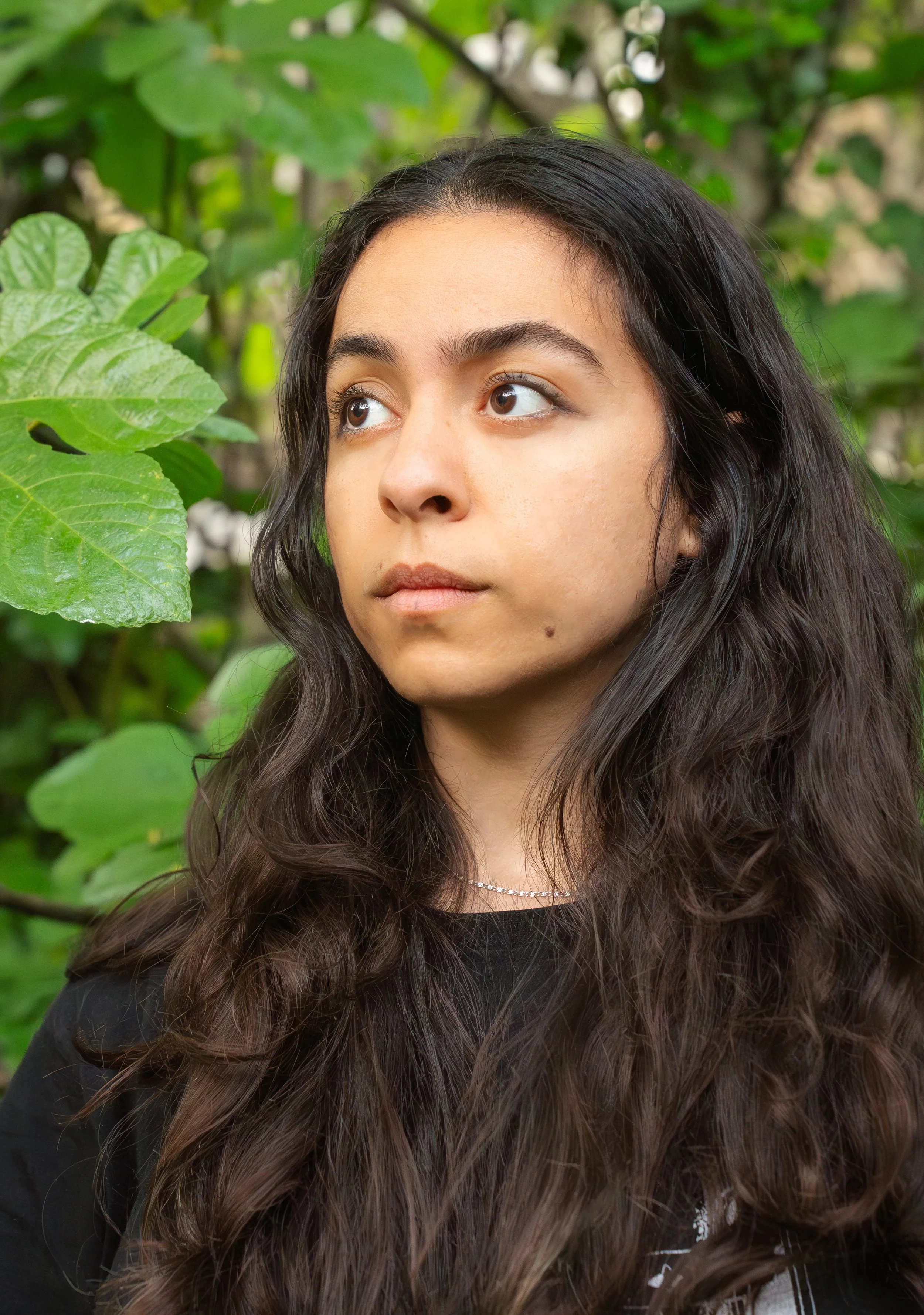
So I’ll start by clarifying what my positions are in writing out these stories: I’m a performing musician, and since late 2025, this has been my only job. I tour, I workshop, I record, I speak at events, I collaborate with other musicians, I spend hours applying for residencies, I usually don’t get them, then sometimes I do. I’m also a Palestinian woman, more or less. When my partner asks me what gender I am I say girly pop, or I tell them to go awayyyyyyy. I’m 30 years old, I have only one passport, and I experience it more as a liability than anything else. I’ve lived in London for a long time, I held a full time job for about eight years before becoming a full-time artist, and I grew up with relative material ease, a lot of which was wiped out because of successive economic crises, gender imbalances, wars, and my desire to follow my dreams into an unknown abyss. My body often works in a way that serves the capitalist machine I live in, and sometimes it rebels; walking, breathing, moving become a bit more painful, giving me a radical slowing of time.
I’m saying all this because how we care and advocate for ourselves, as you’ll hear in the stories I mention, is informed so deeply by all of these details about myself, and I can’t offer a formula for how care looks in any one circumstance. So I want to expressly say that I’m not looking for correctness in my stories, just inspecting problems as wholly as I can. These above descriptors (young/old, able-bodied/disabled, gender-legible/not, European/Other) both give me an identity (ie. group to belong to) and make my identities impossible to pin down (across time, every one of these descriptors has changed its meaning in the world, and my understandings of each of them has also changed).
As a result, I’m very particular about the overuse of the term “identity” as a finalised understanding of oneself. If you either are or are not any one of these things then that’s a fiction that I find doesn’t stand the test of time and complexity. We need fictions about ourselves, but how can we be informed by our personal and collective histories, and how can we colour the places where we live and relate (like our respective organisations) with our collective histories, without making our identities so ossified that they break with fragility on inspection? This is more controversial than it sounds, mostly because we are in a world where we hold up our identities as shields of protection to prevent ourselves from being held accountable (reminder: Palantir’s controversial CEO claimed that when he is questioned about his intentions with the company, he shows signs of neurodivergence, and we should all stop bullying him for wanting to bribe leaders worldwide to test war software on marginalised communities). So identities can be a catch-all way of understanding our own contradictions; they could flatten us in the process.
These points serve one purpose: to preface the stories of caring and uncaring structural behaviour that you can listen to in the audio piece. In summary, The Keychange Manifesto 2.0 includes a clause on care, and because care is not a static object, it’s a process, it’s worth imagining together how we can colour our world with it, especially if we want to operationalise our identities not to make ourselves into boring objectified versions of ourselves, but because we want to continue our search for a kind of care that constantly expands, like Lorde’s acts of political warfare. So I’ll ask in each of the stories I tell: how can this story help us expand our understanding of care at the structural level? ie. between you and me, but also between institutions and us.
About Bint Mbareh